Build a Listening Hour Around One Album Sleeve
Build a listening hour around one album sleeve with a simple sequence for looking, listening, and talking that makes familiar music feel newly attentive.
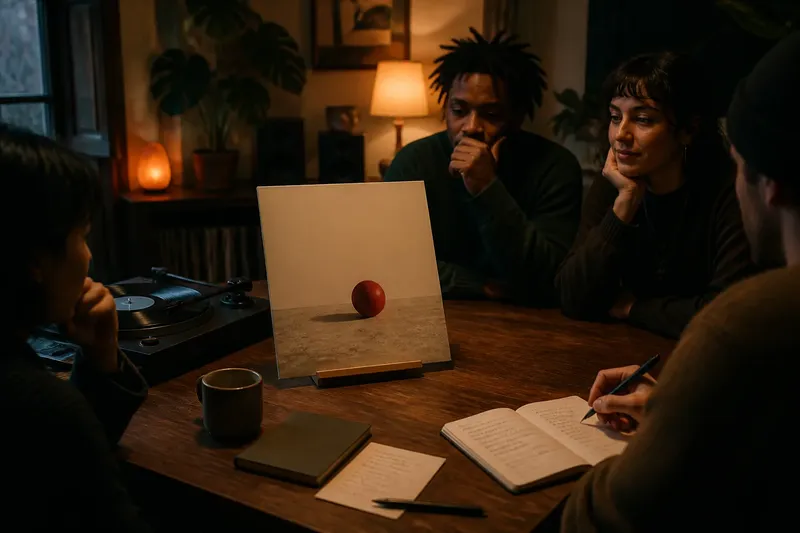
A listening hour around one album sleeve works best when the artwork gives your attention somewhere to rest, not when you try to decode it. Choose a record you can play without interruption, set the sleeve within easy reach, and let its images shape a few pauses before and after the music.
The occasion can be quiet or shared, at home or in a community room. No specialist vocabulary is needed. The useful work is noticing what the sleeve actually shows, hearing what the album does, and allowing those impressions to sit beside one another without forcing a single answer.
Choose a sleeve with room for looking
Pick an album whose cover you can see clearly and whose music you are willing to hear as a whole. A familiar record can reveal details you have overlooked; an unfamiliar one can keep your expectations light. Either way, the sleeve should invite attention rather than require background research.
Use the physical jacket if you have it. Place it on a clean table or prop it upright where everyone can see it. If you are using a digital image, choose a large, uncropped view that includes the back cover or inner sleeve when available. Avoid making the artwork compete with a bright screen, a stack of other records, or a stream of notifications.
Think about the room as part of the occasion. A chair, a lamp, and a surface for the sleeve are enough. Keep a notebook or a few slips of paper nearby, but do not turn the gathering into a quiz. The point is to make observation easy, not to collect the most observations.
Begin with a quiet look at the front
Before playing anything, spend a short stretch looking at the front cover. Notice the most immediate features: color, texture, objects, faces, lettering, and the way the image is arranged. Then look again for a detail that did not claim your attention at first.
Try describing the cover without interpreting it. “A small figure stands near the edge of a dark field” gives the group something visible to discuss. “The figure represents loneliness” may be a reasonable reading, but it moves quickly from observation to conclusion. Keeping those modes separate makes room for different responses.
If you are alone, jot down two details and one question. If you are with others, invite each person to name one thing they noticed, without asking anyone to explain what the album means. No one needs to agree, and silence is a perfectly usable response.
Let the first play interrupt your assumptions
Start the album and leave the sleeve in view. Listen for sound rather than searching for a match to the picture. You might notice a repeated rhythm, a change in vocal distance, a sudden pause, or a sound that seems to sit in the background. A listener does not need to identify instruments or production methods to describe what reached them.
When the side or album ends, take a pause before speaking. Look back at the cover and ask whether anything you heard changed what you noticed. Perhaps the image now feels busier, calmer, or less certain. Treat that as a shift in your response, not as proof that the artwork contains a hidden explanation.
Say you choose a record with a pale cover and a single red object near its center. Before listening, you notice the contrast but have no clear interpretation. During the album, a recurring sharp percussion sound catches your attention; afterward, the red object seems more vivid to you. That connection belongs to your listening, and another person may make a different one.
Give the back and inner sleeve their own turn
After the first play, look at the back cover and any inner sleeve or printed insert. Credits, track titles, photographs, and small design choices offer another layer of attention. Read what is there, but do not assume that every printed detail carries a clue to be solved.
Then play a track or passage again, if the format allows, with one piece of printed information in mind. A track title might alter what you expect to hear; a credit might prompt you to notice a voice or instrument more closely. The listening remains open: the printed detail can guide attention without dictating the result.
For a gathering, let each person choose a detail from the packaging and say what it makes them listen for. Keep the prompt concrete: “What sound did you notice after reading that title?” works better than “What is the artist trying to say?” The first invites a report; the second can make an ordinary difference of opinion feel like a test.
Keep the listening hour comfortable when plans change
What if the sleeve seems blank or uninteresting?
Look at its materials and layout instead of asking it to tell a story. A plain field, small type, or repeated pattern can still direct your gaze, and you can compare that visual restraint with the album’s changing sounds. If nothing holds your attention, choose another sleeve; the occasion does not depend on making every cover profound.
How can listeners handle different interpretations?
Different readings can coexist without one person settling what the artwork means. Ask each listener to point to the image detail or musical sound behind their response, then describe that response as an impression rather than a verdict. If the group starts arguing over which meaning is correct, return to what each person actually noticed and let the interpretations remain distinct.
What if the group talks through the music?
Agree on a listening stretch during which conversation pauses, then leave time to talk afterward. A visible cue, such as turning the sleeve face down when the music starts, can mark the change without scolding anyone. If the group prefers to talk as it listens, accept that as a different kind of gathering rather than trying to force close listening.
What if the album is too long for the occasion?
Choose a side, a short sequence of tracks, or one track for a focused session. Say plainly what you are playing so nobody expects a complete album listen. A deliberate excerpt can still leave time to look, listen again, and exchange impressions.
Keep the conversation grounded in what happened
Once the music has stopped, ask questions that connect looking and listening without demanding expertise. Which sound stayed with you? What did you notice on the sleeve only after hearing it? Did a printed detail send your attention somewhere unexpected? These prompts make room for the small, specific observations that give a listening hour its character.
It can help to distinguish three kinds of response: what is visible, what is audible, and what a person makes of those things. Someone might point to a crowded photograph, mention a dense arrangement, and say the combination feels restless. Each part is useful, even if another listener experiences the same image and music differently.
What is not worth the effort is researching every name, symbol, and design choice before the gathering. A little context can be welcome if someone already knows it, but turning preparation into homework pulls attention away from the sleeve and sound in front of you. If a question remains, let it remain a question.
Make the ending feel like part of the ritual
Close by returning the sleeve to its place and giving each listener one final sentence: a detail they want to remember, a sound they would hear again, or a question they are leaving open. Keep the response brief enough that the ending does not become another round of analysis.
If you plan another listening hour, change only what feels useful. You might choose a different kind of artwork, invite a quieter group, or spend more time with the reverse side. The central idea of a listening hour around one album sleeve is modest: let the printed image hold your gaze, let the music unsettle or enrich it, and leave with one observation that belongs to this particular encounter.
Store the sleeve carefully after the gathering, especially if it is borrowed or delicate; follow any care guidance supplied with the record. That small act gives the occasion a clear end and leaves the album ready for another kind of attention.